There’s a version of a Morocco trip that looks great on Instagram and leaves you feeling vaguely hollow on the flight home. You covered the distance. You photographed the things. You ate the food in the places that were recommended to you. And somehow you landed back in your ordinary life without the feeling that something real had happened. Then there’s the other version. The one where Morocco gets into you in a way you weren’t expecting and don’t entirely know how to process on the journey back. Trips in Morocco can go either way, and the difference is almost entirely in how you plan them and who you plan them with.
What Makes Morocco Different From Other Destinations
Morocco sits at a crossroads in a way that’s geographic but also deeply cultural. It’s in Africa but it faces Europe across the Strait of Gibraltar. It’s an Arab country with a Berber soul that predates Arab influence by thousands of years. It was shaped by French and Spanish colonialism in the twentieth century in ways that are still visible in its architecture, its languages, and its bureaucratic structures. All of these layers exist simultaneously and visibly, which gives the country a complexity that takes time to start reading but is endlessly interesting once you begin to notice it.
The landscape compounds this. Morocco contains Atlantic coastline, Mediterranean beaches, the Rif Mountains in the north, the High Atlas running through the center, the Anti-Atlas in the south, vast plateaus, fertile plains, and eventually the Sahara Desert in the southeast. For a country that fits comfortably on a map, it contains a geographical variety that feels almost implausible when you experience it on the ground.
The Trips in Morocco That Actually Work Versus the Ones That Don’t
Here’s the honest version of this. Trips in Morocco that try to cover every major destination in seven days don’t work. They produce a kind of blur — a sequence of medinas and mountain views and dinner tajines that eventually start blending together because there wasn’t enough time in any single place for it to actually land. You were moving again before the previous stop had fully registered.
Trips that go slower and deeper work considerably better. A week genuinely focused on Marrakech and the desert gives you something real. Ten days that adds Fes and one coastal stop gives you a Morocco that feels like a country rather than a highlight reel. Two weeks that includes a proper Atlas mountain experience, genuine time in Fes, and a night or two in Chefchaouen gives you the kind of layered understanding of a place that you carry with you as actual knowledge rather than just memories of photographs you took.
The rule is simple even if it’s hard to apply when you’re excited about everything Morocco contains: resist the urge to cover too much. Go deep instead of wide. You’ll come home feeling like you experienced something rather than just witnessed it.
Marrakech: The Beginning of Most Morocco Journeys
Marrakech greets every new visitor the same way. Completely and all at once. There’s no gentle introduction, no quiet on-ramp. The city starts immediately and doesn’t pause while you adjust. Djemaa el-Fna, the great central square, is operating on its own logic at every hour of the day and a completely different logic after dark. Smoke from the grills, the percussion of musicians who’ve been playing the same songs in the same spot for decades, orange juice vendors calling out in several languages simultaneously, the slow orbit of tourists around the edges and the completely purposeful movement of Marrakchis who are simply going about their evening — all of it happening at once, at volume, in every direction.
The medina that surrounds the square is where the real work of understanding Marrakech begins. The streets narrow to the width of two people passing carefully. They open without warning into small squares with a single tree and a fountain and a cat sleeping in the only patch of shade. They dead-end. They double back. They lead you past a woodworker’s workshop and a spice merchant and a school where you can hear children reciting something rhythmic through the wall and a doorway that opens into a courtyard so beautiful you stop walking completely.
Getting lost here is not a problem. It’s essentially the activity. The medina is not large enough to be genuinely dangerous to navigate and not small enough to be navigated quickly. You will find your way out. While you’re finding it, you’ll see the city in a way that no organized walking tour fully replicates.
The Sahara: What No Photograph Has Ever Properly Captured
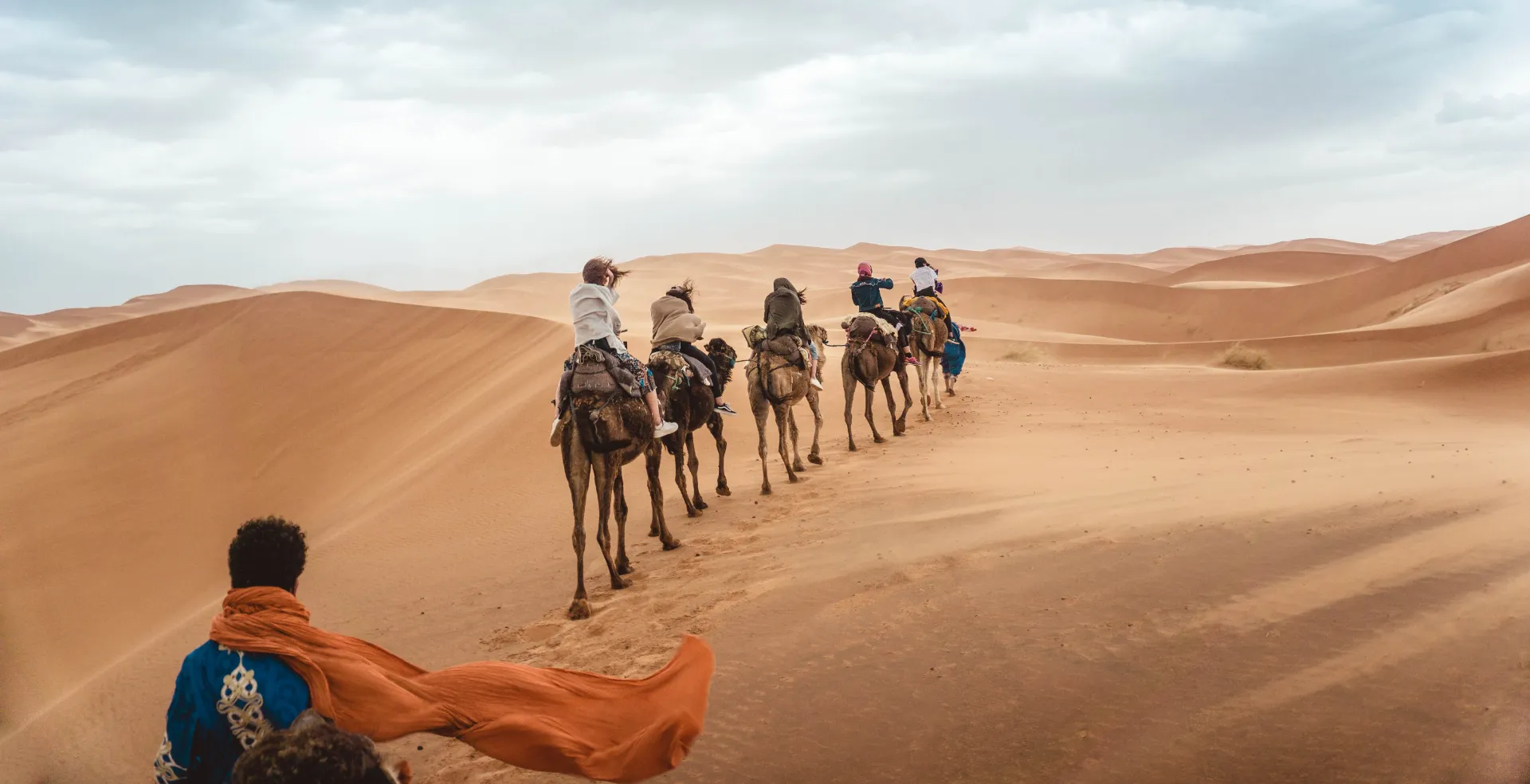
Every Morocco travel article includes photographs of the Erg Chebbi dunes near Merzouga. They’re always beautiful. They always fail to communicate the actual experience of standing at the base of a one hundred and fifty meter dune as the sun is going down and the color of the sand is doing something that has no name in any language you speak.
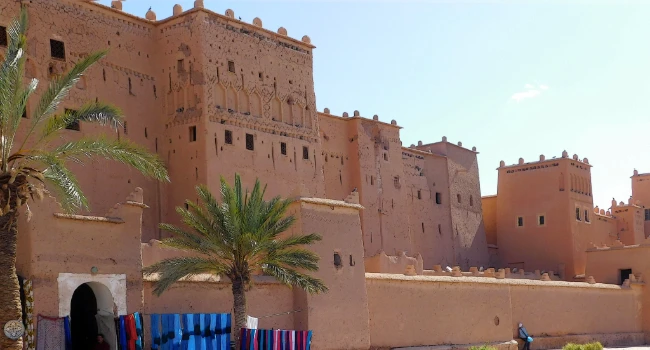
The drive to get there is its own reward. The road from Marrakech crosses the High Atlas through the Tizi n’Tichka pass, descends into landscapes that grow progressively more dramatic, passes through the Draa Valley where date palms line the road for kilometers and ancient kasbahs rise out of the earth in colors that match the ground they were built from, and eventually arrives at the flat plains before the dunes where the air gets noticeably drier and the horizon opens up in a way that feels like the world getting larger.
A camel trek into the dunes at sunset is, yes, a tourist activity. It’s also one of the genuinely great travel experiences available anywhere. The rhythm of the camel, the way the camp appears in a hollow between dunes when you’ve been climbing and descending for an hour, the quality of the silence once you’ve arrived and the sun has finally set — these are things that happen to you rather than things you observe, and that’s the difference that matters.
Sleeping in the desert under those stars and waking up cold and climbing a dune in the gray pre-dawn light to watch the sun come back — do this. Whatever else you include or exclude from trips in Morocco, do this.
Fes: Where Morocco’s History Lives and Breathes
Fes doesn’t try to impress you. That’s the first and most important thing to understand about it. Marrakech is theatrical in the best possible sense. Fes is simply itself, operating on rhythms that have been established for over a thousand years and sees no particular reason to adjust them for visitors.
The medina of Fes el-Bali is the largest car-free urban area in the world. Nine thousand streets and alleyways, many of them too narrow for anything wider than a loaded donkey, form a network that defies conventional navigation and rewards surrender. The Kairaouine mosque and university at the city’s heart has been operating continuously since 859 AD. Sit with that for a moment. It was functioning before the Norman conquest of England. Before the Crusades began. Before most of Europe’s great cathedrals were built. And it is still functioning today.
The tanneries are the image most people associate with Fes and they earn their fame. The stone vats filled with natural dyes, the workers moving hides through the process in methods unchanged for centuries, the surrounding workshops where the finished leather becomes bags and belts and slippers — it’s visually extraordinary and contexturally fascinating once you understand what you’re actually looking at. The mint sprigs the shops hand you before leading you to the rooftop viewing terraces are not decorative. The smell from the vats is significant and immediate and you’ll be grateful for the mint within about thirty seconds.
Chefchaouen: The Place That Makes You Slow Down Immediately
Chefchaouen sits in the Rif Mountains and operates at a pace that feels deliberately calibrated to undo whatever tension you’ve accumulated elsewhere. The blue walls are real and they’re genuinely that blue — not a filter, not an exaggeration, just walls that have been painted and repainted in shades of cobalt and indigo for decades, creating a medina that feels like walking through a watercolor painting that someone has made inhabitable.
The city is smaller than the imperial cities and more immediately navigable, which means you can stop trying to orient yourself and just walk. The mountain air is noticeably cooler than Marrakech or Fes even in summer, which is a genuine physical relief after several days in the heat of the lowland cities. The overall feeling is of a place that isn’t performing for tourism even though it receives plenty of it, which is a quality increasingly rare in Morocco’s more visited areas.
Spend two nights here if your itinerary allows it. One night is enough to see it. Two nights is enough to feel it.
Choosing Who Helps You Plan and Execute Your Trip
This decision shapes everything downstream. Morocco is genuinely navigable independently, especially for experienced travelers who are comfortable with ambiguity and enjoy figuring things out on the fly. But having the right operator or guide working with you opens a version of Morocco that independent travel in a limited timeframe rarely accesses.
Travelers who want trips in Morocco built around genuine depth and real local knowledge will find that Trips in Morocco through Marrakech Morocco Tours are designed by people who live this country rather than people who have read about it.
The practical difference shows up in the riad chosen over the hotel, the restaurant that isn’t on any tourist map but serves food that becomes the meal you talk about longest, the route variation that adds twenty minutes to a drive and an entirely different landscape to the experience. These aren’t random improvements. They’re the result of years of genuine on-the-ground knowledge applied to the specific goal of making Morocco reveal itself properly to people who have come a long way to experience it.
A Few Honest Notes About Practical Reality
Morocco is safe for tourists. Petty scams targeting visitors exist in high-traffic medina areas and are worth being aware of without becoming paranoid about. The most common ones involve unsolicited guides who insist on leading you somewhere and then expect payment, and carpet shop detours disguised as friendly directions. A polite but firm no thanks handles most of these situations without drama.
The dirham is Morocco’s currency and it’s not convertible outside the country, so plan to exchange money after you arrive. ATMs are widely available in cities. Tipping is a genuine part of how local service workers are compensated rather than an optional gesture — budget for it as part of your trip costs rather than treating it as an add-on decision in the moment.
Spring and autumn are the best travel seasons for most of Morocco. Summer works on the coast and at altitude but is seriously hot in the inland cities. Winter is mild across most of the country and significantly less crowded, which has its own considerable appeal.
Conclusion
Trips in Morocco reward the travelers who approach them with patience, genuine curiosity, and a willingness to let the country set the pace at least some of the time. The ones who leave most satisfied are almost never the ones who covered the most ground. They’re the ones who stayed long enough in the right places to let Morocco stop being a destination and start being an experience. Plan it carefully. Hold the plan loosely. Trust the right people to help you execute it. Then let Morocco do what it has been doing to travelers for centuries — surprising them completely and sending them home changed in small ways they’ll spend a long time understanding.
FAQ
Q: What is the ideal length for trips in Morocco that want to include both desert and cities? A: Ten to twelve days gives you a genuinely satisfying combination of Marrakech, the Sahara desert circuit, and one or two additional destinations without the constant rushing that compresses everything into blur. Two weeks is better still and gives you actual flexibility to slow down when a place earns it.
Q: What should I pack for trips in Morocco that include both desert and mountain experiences? A: Layers are essential because the temperature differential between desert nights and midday heat, and between lowland cities and mountain altitudes, is significant. Comfortable walking shoes that can handle uneven medina surfaces and light hiking are worth prioritizing. Modest clothing for medinas and religious sites. A good scarf that works as sun protection, warmth in the desert at night, and modesty covering when needed is one of the most versatile things you can bring.
Q: Is it possible to do meaningful trips in Morocco on a limited budget? A: Yes, Morocco is one of the more accessible destinations in terms of cost once you’re there. Accommodation ranges from very affordable guesthouses to luxury riads. Food at local restaurants and street stalls is inexpensive and often excellent. The main cost variables are the quality of your accommodation and whether you’re on a private or group tour arrangement.
Author

Related Posts

Why a Yamaha Boat Rental Makes Lake Havasu Worth Every Mile
There’s a specific kind of regret that hits you on the drive home from a lake trip — the kind where you...
Boat Rentals Lake Havasu City for Amazing Lake Adventures
From a family getaway to a romantic getaway to a fun weekend with friends, renting a boat is one of the best...
Read out all
Experience the Thrill of Indoor Skydiving with Bodyflight Sweden
Have you ever dreamed of flying through the air like a professional skydiver but without jumping from an airplane? Modern indoor skydiving makes this...
How a Vacation Planner Turns Travel Dreams Into Booked Reality
Most people spend more time planning a kitchen renovation than they spend planning the vacation they’ve been dreaming about for years. That...
Read out all
Affordable European destinations that tourists keep skipping
Most people planning a European trip consider the same three cities. Paris, Rome, and London. All worth visiting. All expensive in summer. All...
Read out all
Capturing authentic moments at the world’s best places to visit
Because of my job as a food photographer, I see every new place through my camera. Every town has its own colors,...
Read out all